
Backwashing is the right move when your pool filter’s pressure gauge reads 8 to 10 psi above its normal clean level, because it reverses water flow to push trapped dirt out through the waste line. Rinsing runs water forward for a short time to settle the sand and flush leftover debris. The real difference in backwash vs rinse comes down to direction and purpose: one cleans the filter bed, the other resets it. If you’ve just added fresh sand or DE powder, skip backwashing entirely — it’ll wash your new media straight into the yard.
Backwash and rinse settings compared
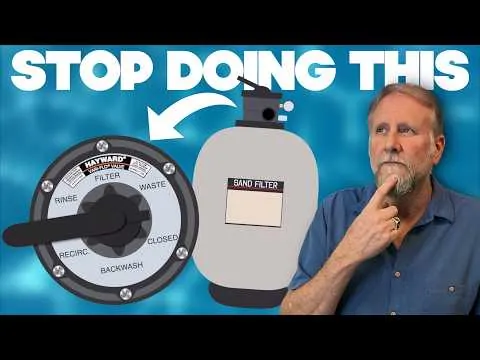
These two multiport valve positions handle different jobs on a sand or diatomaceous earth (DE) filter. You’ll use both during regular maintenance, but they don’t swap places.
| Method | How long | Effort | Cost | Best for |
|---|---|---|---|---|
| Backwash | 2–3 minutes | Medium | Low | Clearing trapped dirt from the filter bed |
| Rinse | 30–60 seconds | Low | Low | Settling sand and flushing waste after backwashing |
| Recirculate | Continuous | Low | Low | Bypassing the filter while adding chemicals |
| Waste | As needed | Medium | Medium | Vacuuming heavy debris or lowering the water level |
Backwash pushes water backward through the media to lift and flush out trapped particles. Rinse sends water forward again, but routes it to the waste line instead of returning it to the pool. That brief forward flow packs the sand bed flat so dirty water doesn’t blow back into your clean pool.
Recirculate skips the filter completely, which helps when you’re mixing chemicals that shouldn’t hit the media right away. Waste pulls water straight from the skimmer and drains it, bypassing everything. Each setting solves a specific problem. Using the wrong one wastes water or leaves your filter doing nothing at all.
Running a backwash cycle
Backwashing reverses the water flow inside your filter tank. Instead of pushing down through the sand, water enters from the bottom and lifts the media bed. This expansion breaks dirt loose and carries it out the waste port. It’s the main way sand and DE filters get cleaned.
- Turn off the pool pump completely before touching the multiport valve handle. Forcing the handle while water is moving can crack the internal gasket, and replacing that spider gasket means opening the whole valve body.
- Push the handle down slightly, rotate it to “Backwash,” and release so it locks into the slot.
- Turn the pump back on and watch the water flowing through the sight glass on the waste line. Run it for 2 to 3 minutes, or until that water turns clear. This assumes a standard residential sand filter running at 50–60 gallons per minute; if your pump moves more water, check the manufacturer’s manual for the exact run time.
- Turn the pump off again before moving the valve.
This method clears compacted debris that normal filtering can’t dislodge. It restores flow rate and brings the pressure gauge back down to its baseline reading.
Backwashing won’t fix channeling, where water carves permanent paths through the sand and avoids the rest of the bed. If the pressure drops but the water stays cloudy, the sand may need replacing or the laterals might be cracked — a job for a licensed pool technician.
Using the rinse setting
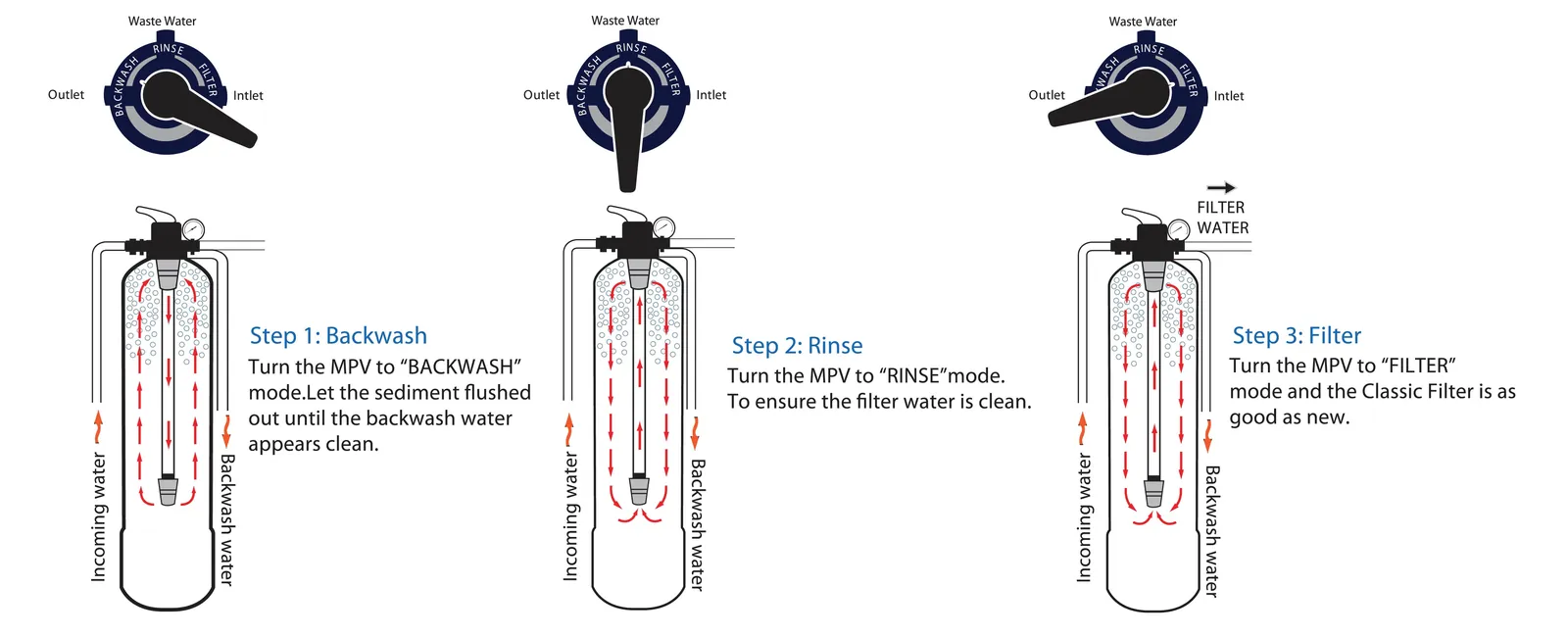
Rinsing always follows a backwash. It runs water in the normal filtering direction, but diverts it to the waste line instead of sending it back to the pool. This repacks the sand bed and catches any remaining dirt that the backwash loosened but didn’t fully eject.
- Make sure the pump is off and the valve handle is locked in place.
- Rotate the multiport handle to “Rinse.”
- Turn the pump on and let it run for 30 to 60 seconds. The water in the sight glass should look perfectly clear by the end.
- Shut the pump off, move the handle back to “Filter,” and restart the system.
Rinsing takes almost no effort and uses very little water. It prevents that initial cloud of dirty water from shooting out of your return jets when you switch back to normal filtration. Without it, the first few minutes of filtered water will look milky.
The trade-off is water loss. Every second spent rinsing is treated water going down the drain. If your local water authority charges high sewer rates based on total usage, those extra 60 seconds add up over a season. Check your utility bill structure before deciding to extend the rinse beyond what’s needed to clear the sight glass.
Vacuuming directly to waste
When your pool floor is covered in heavy debris — dead algae, sand from a storm, or thick mud — sending it through the filter clogs the media instantly. The waste setting bypasses the filter completely. Water travels from the skimmer, through the pump, and straight out the backwash line.
- Attach your vacuum head and hose, then fill the hose with water to prime it and prevent air from hitting the pump impeller.
- Turn off the pump and set the multiport valve to “Waste.”
- Turn the pump on and vacuum slowly across the pool floor. Watch your water level closely, because this method drains the pool as it cleans.
- Stop when the debris is gone, turn off the pump, and return the valve to “Filter.” Add fresh water to replace what you drained.
This handles messes that would overwhelm a normal filter cycle. It’s also the only safe way to lower the water level after heavy rain without flooding your equipment pad.
It demands constant attention. Draining the pool below the skimmer opening lets the pump suck air, which can overheat and destroy the motor seal in minutes. If the water drops too fast, stop immediately. Cartridge filters don’t have a multiport valve, so this approach doesn’t apply to them — you’d need a separate drain valve plumbed before the filter housing.
Picking the right valve position
Your choice depends entirely on what’s happening in the pool right now. Speed, experience, and water clarity each point to a different setting.
If you’re in a hurry and the pressure gauge just spiked past its clean baseline, go straight to backwash. It’s the fastest way to restore flow and drop the pressure back to normal. Skipping it to save five minutes leaves the pump straining against a clogged bed, which draws more electricity and wears the motor faster.
If this is your first time cleaning the filter, pair backwash with an immediate rinse. New pool owners often forget the rinse step, and the result is a brown cloud shooting out of the return jets for ten minutes. Doing both together guarantees the sand settles flat before you open the path back to the pool.
If you want the best possible water clarity regardless of time spent, vacuum heavy debris to waste first, then backwash, then rinse. This three-step sequence keeps large particles out of the filter entirely, preserves the media bed, and ensures the final water passing through is genuinely clean.
The trade-off here is always between water volume and filter health. Saving water means leaving some dirt behind. Protecting the filter means draining more from the pool. Your pressure gauge tells you exactly where your specific system sits between those two points — read the needle, not the calendar.
Rules for every filter cleaning
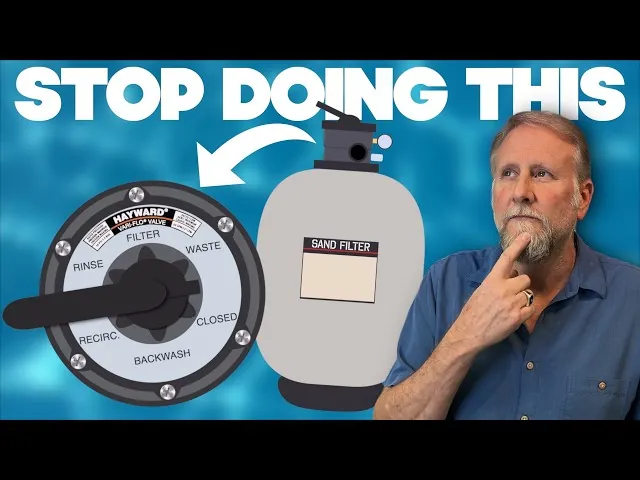
No matter which valve position you choose, a few steps stay exactly the same. Skipping them damages equipment or wastes water.
Always shut off the pump before moving the multiport valve handle. Turning the dial while water is flowing shears the internal spider gasket. Once that rubber seal tears, water leaks between ports internally, and your filter stops working properly even when the handle looks correct. Replacing it requires disassembling the entire valve top.
Watch the sight glass whenever water heads toward the waste line. That small glass tube shows you exactly when the dirt is gone. Running the pump blind for a fixed timer wastes hundreds of gallons once the water is already clear.
Check the pressure gauge before and after every cleaning. The number you need isn’t universal — it’s the reading your specific filter shows when the sand is fresh and the pump is running at its normal speed. Write that clean pressure down on the tank with a marker.
When the needle climbs 8 to 10 psi above that mark, it’s time to clean. The CDC’s pool operation guidance outlines baseline sanitation practices, but your own starting pressure is the only trigger that matters for mechanical cleaning.
Finally, never leave the valve sitting on backwash or waste when you walk away. If the pump gets turned on accidentally by a timer or another person, it’ll drain the pool unattended. Always return the handle to “Filter” before you finish.
Frequently asked questions
How long should I backwash my pool filter?
Run the backwash for 2 to 3 minutes, assuming a standard residential sand filter operating around 50–60 gallons per minute. Don’t rely solely on the clock — watch the sight glass on the waste line. When the water inside it runs completely clear, the dirt is out. Larger commercial filters moving higher volumes may need longer; check the manufacturer’s label on your specific tank for its rated flow.
What happens if I don’t rinse after backwashing?
Dirty water blows straight back into your pool through the return jets. Backwashing lifts the sand bed and leaves it loose, with residual debris sitting near the top. The rinse cycle pushes water downward in the normal direction, packing the sand flat and flushing that leftover dirt out the waste line instead of into your swimming water.
Can I backwash a cartridge filter?
No. Cartridge filters don’t have a multiport valve or a backwash setting. You clean them by turning off the pump, opening the filter housing, removing the pleated cartridges, and spraying them down with a garden hose. Forcing water backward through a cartridge can tear the fabric and ruin the element.
Why is my pool still cloudy after backwashing?
Cloudy water after cleaning usually means the chemistry is off, not the filter. Check your free chlorine and pH levels first. If the water balance is correct, the sand might be channeled — meaning water carved paths through the bed and bypassed most of the media. Old, rounded sand that’s lost its sharp edges also fails to trap fine particles.
Is it safe to backwash while people are swimming?
Turn everyone out of the pool first. Backwashing changes the plumbing dynamics and pulls hard suction from the main drain and skimmers. More importantly, you shouldn’t run the pump with swimmers present during maintenance cycles, as the altered flow can affect drain covers. Wait until the pool is empty, finish your backwash and rinse, then let people back in.
How often does a sand filter need backwashing?
The pressure gauge decides the schedule, not the calendar. When the needle rises 8 to 10 psi above your recorded clean starting pressure, backwash. In heavy summer use with lots of swimmers, that might happen weekly. During a cool, empty month, it could take four weeks. Reading the gauge is the only reliable method.
What’s the difference between recirculate and filter?
Recirculate pulls water from the pool and pushes it right back in without passing through the sand or cartridges. Use it when you’re adding chemicals that shouldn’t hit the filter media immediately, like certain algaecides or flocculants. Filter sends the water through the media bed to trap particles before returning it. Leaving the valve on recirculate permanently means nothing gets cleaned out of the water.
Conclusion
Every pool filter operates within a narrow window between clean flow and clogged strain. Read your pressure gauge, follow the steps in order, and never force a valve handle while the pump is running. Those three habits keep the water clear and the equipment alive far longer than guessing at a schedule ever will.